Aish logo

Aish

@aishjewish

Israel

Unclaimed

Aish.com: Your up-to-date resource on Jewish food, philosophy, history, current events, spiritual growth, holidays and more!

Listed by the directory from public sources. Not yet claimed by Aish.

Claiming is free and takes a minute: a Verified badge, your own photo, bio and links, and a stronger place in the rankings.

Posts on X

Aish@aishjewish

Tomorrow marks three years since October 7, 2023, where over 1,200 men, women, and children were murdered, and 250 were kidnapped from Israel by Hamas terrorists. What has three years since October 7 taught you about: -Being Jewish? -Your priorities? -The strength of the

2110
Aish@aishjewish

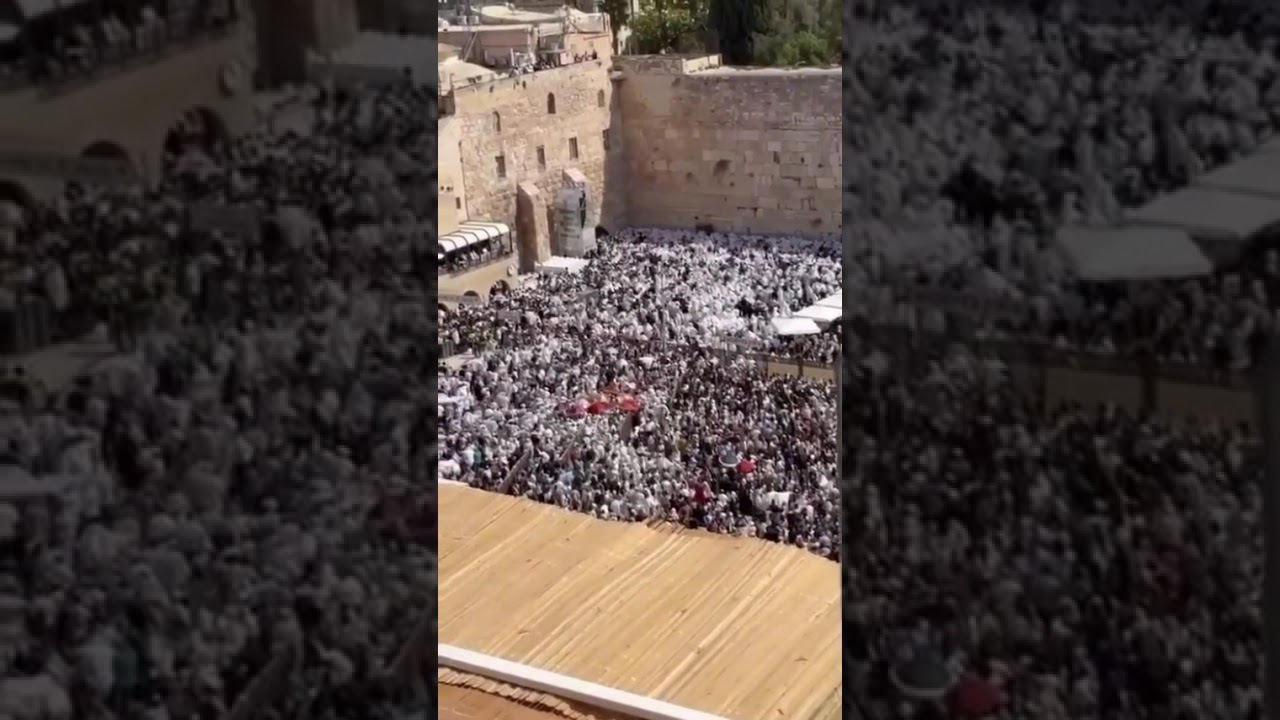
On Monday, thousands of Jewish people gathered at Jerusalem’s Western Wall for Birkat Kohanim, the Priestly Blessing. During this special prayer, Kohanim, descendants of the ancient Jewish priests, bless the Jewish people with words from the Torah asking God for protection,

112107
Aish@aishjewish

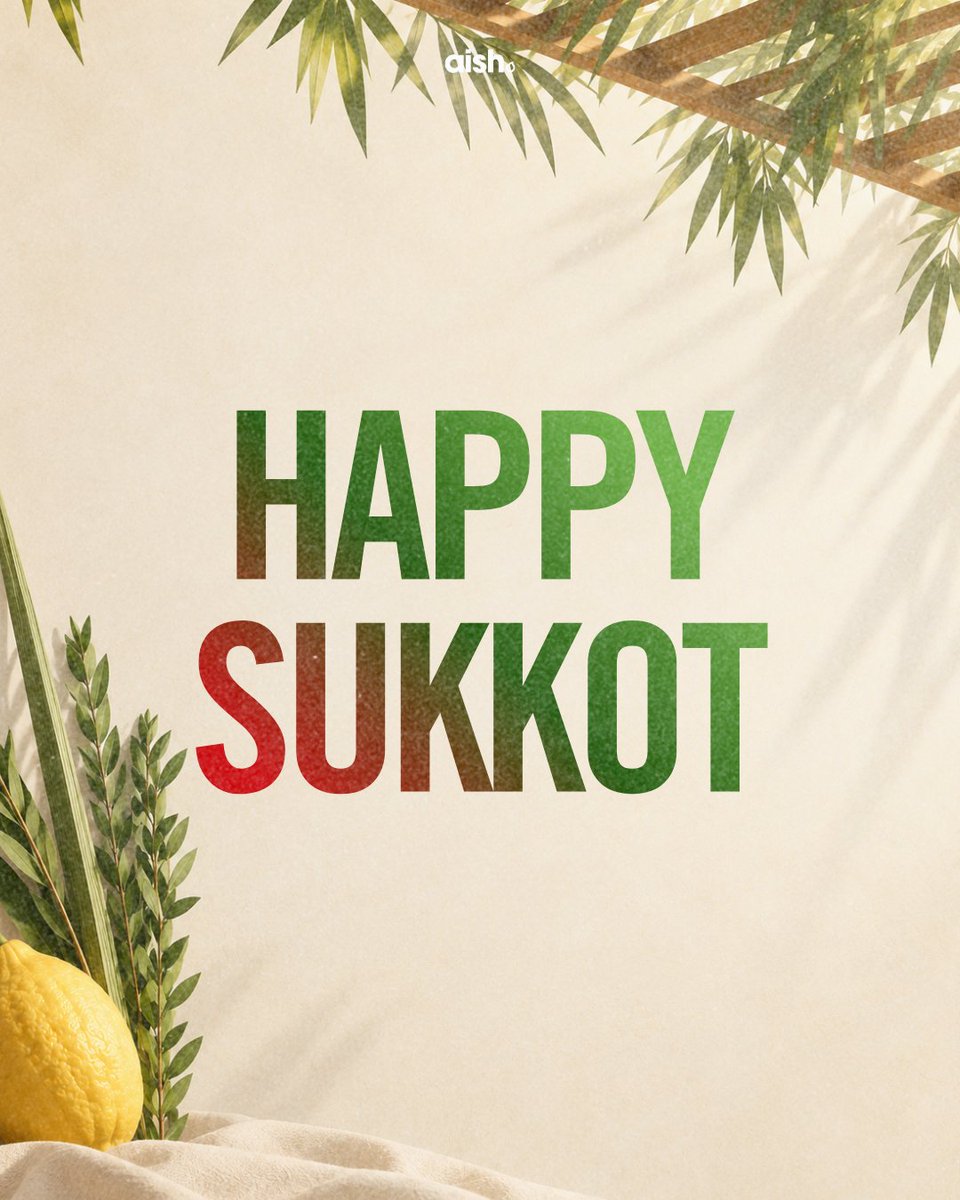
The festival of Sukkot begins tonight 🌾 It's a weeklong Jewish holiday that celebrates the harvest and commemorates how God protected the Israelites after they were freed from slavery in Egypt. During Sukkot, Jews spend time in a temporary outdoor structure called a sukkah,

231
Aish@aishjewish

What started as Macklemore’s hijacking of Ed Sheeran’s concert tour via a Free Palestine message has spiraled into international news, reigniting the Israel/Palestine debate, and almost canceling Ed Sheeran’s tour altogether. Patriots owner Robert Kraft tried to silence

59
Aish@aishjewish

Some days are just hard. Jewish wisdom teaches that you don’t have to understand why something is happening or how it will work out while you’re still going through it. “This too is for the good” is a reminder that what feels difficult today may look very different with time. ❤️

2124
Aish@aishjewish

Tucker Carlson can rightfully be identified as one of those most responsible for normalizing antisemitism in America today. He regularly uses his platform of over 30 million listeners to promote conspiracy theories and falsehoods against Israel and Jews. Among his more

1164
Aish@aishjewish

Here are three things to keep in mind about Yom Kippur, the Jewish Day of Atonement.

14158
Aish@aishjewish

Yom Kippur, the Day of Atonement, is considered the holiest day of the Jewish year. It’s meant to be a day of prayer, reflection and stepping away from the distractions of everyday life. 🧵

12159
Aish@aishjewish

Judaism sees every human being as a Godly soul. We are all born into this world uncontaminated, innocent, pure love and goodness. And that remains at the core of who we are for our entire life. This is our true nature. However, over the course of time, we stray from that. The

149
Aish@aishjewish

Based on a real story, an amazing insight for Yom Kippur

12102
Aish@aishjewish

The Yom Kippur Terror Attack

4148
Aish@aishjewish

On Yom Kippur, the holiest day of the year, a terrorist rammed his car into a security guard outside Heaton Park Hebrew Congregation in Manchester, then tried to force his way inside with a knife. Inside, congregants held the doors shut against him, some paying with their lives.

60
Aish@aishjewish

This year, the Fast of Gedaliah is on September 14. It might seem strange to fast just after celebrating the Jewish New Year, but there’s an important reason why.

7411
Aish@aishjewish

Rosh Hashanah, the Jewish New Year, starts tonight! 🍎🍯 Wishing you a year filled with health, happiness, peace, growth, love, and countless blessings. ❤️

2426304
Aish@aishjewish

From dance music DJ to Buddhist monk to Orthodox rabbi, Rav Dov Ber has come a long way. On the beach in Tel Aviv, he answered questions from people passing by, including a big one: Is She the One? 5 Signs You Should Marry Her

19452
Aish@aishjewish

Happy Rosh Hashanah! Rosh Hashanah, the Jewish new year, begins Friday evening 🍎🍯 This is from @marvel’s Spidey and His Amazing Friends UnBEElievable Rosh Hashanah episode 🐝 #Jewish #RoshHashanah #JewishHoliday

1217556
Aish@aishjewish

Jews Don’t Say Happy New Year. We Say Shana Tova 😎 Similar, but Very Different.

4370
Aish@aishjewish

It's not just a new year with better food. Rosh Hashanah is a tool, and this free guide shows you how to use it. Get the free guide today 👉 engage.aish.com/high-holidays-…

5308

Posts on Instagram

@aish.com

Posts on Facebook

Aish on Facebook
Aish21h ago

Before attending the Nova music festival in the south of Israel on October 7th, Gali Segal and Ben Binyamin were a regular Israeli engaged couple, planning their wedding. They got engaged on a trip to Italy, where Ben presented Gali with a ring and a beautiful bouquet of roses. The couple have known each other for seven years. Gali is studying interior design and Ben works in real estate, but his passion is soccer. He played in the national league as a defender. “Soccer is my whole life,” he says. Together with some friends, Ben and Gali went to the Nova music festival to celebrate Ben’s birthday. The celebration turned into a nightmare. “Suddenly, we saw mortars exploding,” says Gali. “We started running towards our car.” The couple and their friend Shani got into their car and began driving, but other people warned them not to continue. They saw a mobile shelter and a policeman motioned to them to go inside. The tiny shelter was full of people, squeezing inside to stay safe. Then Ben, Gali, and Shani heard gunshots coming closer and closer. People were screaming. The terrorists were shooting at the people crowded at the entrance to the shelter. “I pulled Ben and Shani down so they wouldn’t get shot,” says Gali. Ben adds, “Several minutes after the shooting, I saw a grenade.” There was a loud explosion. “I thought to myself that we stood no chance of getting out of there,” says Ben. “We must have lost consciousness,” says Gali. When they opened their eyes, everything was black. Gali says, “I remember seeing Shani walking out of the mobile shelter, talking on the phone. She said, ‘Gali and Ben are injured, maybe dead.’ She wasn’t sure if she should run away or stay. And I couldn’t call out to her. I couldn’t speak.” Many were hurt in this explosion. Surrounded by cries for help, Gali felt around her body. “I went into complete shock,” she recalls. “I screamed, ‘I don’t have a leg!’ And Ben, next to me, said, ‘Save your strength! Stop screaming!’ He said to me, ‘If that’s our fate, if that’s what’s supposed to happen to us, at least we’re together.’ It felt like the end.” Right then, a SWAT officer, part of the security team at the festival, arrived at the mobile shelter. He exchanged fire with a terrorist shooting at the shelter and managed to get inside where he found many people screaming for help. “Thanks to him, we’re here,” says Gali. “If he hadn’t come at that exact time and had managed the situation the way he’d done, we wouldn’t be here.” The officer stopped cars fleeing the festival and asked them to take the wounded to the ambulances waiting at the entrance. When Gali and Ben were pulled out of the shelter and taken to the ambulances, neither of them knew if the other one was still alive. Gali says, “The whole time in the ambulance, I was in shock. I was screaming. And when we got to the hospital, I kept asking everyone, ‘Where is Ben?’” Ben recalls, “When I arrived at the Soroka Medical Center, my vitals were low. They thought I wouldn’t make it.” When Gali was wheeled through the hospital hallway, she saw Ben in a bed nearby. He saw her too, and they called out to each other. Gali says, “The moment we realized we were both alive was such a relief!” Their joy was marred by the realization that they both lost their right legs. Two days later, Ben and Gali were transferred to the Hillel Yaffe Hospital in Hadera. In the following weeks, Ben underwent three surgeries, and Gali underwent seven. Throughout this time, they remained next to each other in the hospital, supporting each other as they came to terms with their losses and coped with physical and emotional pain. Slowly, they learned of the extent of Hamas’s horrific terror attack. Their friend Shani was declared missing and later found dead. The hospital staff is going out of their way to help the couple recover, from providing medical care to organizing a challah separating ceremony in the department. Gali and Ben are still looking forward to their wedding, but they have a long road ahead of them. Ben says, “We looked out the window, and we saw two soccer fields. I looked at them and started crying. Like I’ve lost what I’d devoted my whole life to… I don’t think it sunk in just yet.” After a month in the hospital, the couple was transferred to the Tel Hashomer rehabilitation department where they were busy with physical therapy. This wasn’t how they’d expected to spend their engagement. Gali says, “There are times when I’m optimistic and say that it’s just a leg, it’s not such a big deal. And there are other times, when I say, ‘It’s not me.’” Read the full article:

53 likes · 6 shares

Open on Facebook ↗

Aish1d ago

I learn Torah every day because it gives me a cohesive set of answers to all of the ultimate questions. What really is God? Why did God create the world? What is the purpose of the Jewish people? Why do bad things happen to good people? What really is prayer? How can one get the most out of life? What are the keys to a successful marriage? What is the secret to happiness? Etc. Science cannot answer these questions, and psychological theories and philosophical speculation have failed to provide consistent and unwavering answers. The Torah offers eternal answers to such questions. I learn Torah every day because it reminds me who I really am. Most of my focus throughout a typical day is on the nitty-gritty that goes with being a teacher, of being a father, of being a spouse, etc. However, Torah reminds me that I am not my profession, nor am I any of the titles I have, nor the roles that I play, nor do my possessions (or lack of) define me. Rather, at my core, I am a soul and that is what matters most. This holds true for every Jew as well. Therefore, I should not base my views of fellow Jews on which type of synagogue they attend, nor on what they look like, nor on who they are going to vote for in the next presidential election, but that they are each a soul. I learn Torah every day because it connects me with the millions of other Jews worldwide who also learn Torah every day. There are several different daily learning programs. One is Daf Yomi in which the same double-sided page of Talmud is studied every day, and the entire Talmud is completed every 7.5 years. Another program of daily study, the one in which I participate, consists of learning a section of the Torah with Rashi’s commentary (which is in sync with the weekly Torah reading in synagogue), a section of the Rambam’s 14-volume legal-code Mishneh Torah, and a section of the Tanya, which is one of the most important texts of Jewish thought. The latter daily learning schedule enables one to complete the entire Torah and Tanya every year, and complete the Mishneh Torah in just under three years for those who devote about an hour per day to learning, though many people complete all three of these texts every year. By learning these three texts in particular, one engages in learning, albeit at the surface level, the totality of Jewish law and thought. In learning Torah every day I know that, every day, there are fellow Jews in Los Angeles, Brazil, Israel, Australia, etc. who are learning the exact words that I am reading, perhaps even at that very moment. Although thousands of miles may physically separate us, learning the same sections of Torah everyday connects us. I learn Torah every day because I want to hear and grow from God’s personalized daily message for me. Every day I find something in one of the texts that I study that if I concretize it, it will make me a better parent, or a better spouse, or better employee, etc. Often this applied through me demonstrating more patience, calmness, and proper speech – which also makes me a better human being and a better Jew. I learn Torah every day because it sharpens my mind. Trying to figure out why Rashi commented on a particular verse, following a very nuanced explanation of a complex theological concept over many days, and trying to remember and keep all the context variables straight in the application of a particular Jewish law all stretch and develop my mind in multiple ways. By exercising my mind in these ways, I am constantly developing a Jewish way of thinking. Those who participate in the daily study of the Talmud will be quick to agree with the maxim that the Talmud is “brain food,“ and if one were to ask any lawyer who has spent time learning in a yeshiva, every one of them will attest that the mental exertion needed for law school is like kindergarten compared to learning Talmud. No wonder why we as a people are so smart! I learn Torah every day because it is one of the most important mitzvot of Judaism. The mitzvah of learning Torah is said to be equal to all of the mitzvot. (The same is said about tzedakah.) Therefore, when engaging in learning Torah, I am getting credit equal to if I were doing all of the mitzvot. Davening (praying), keeping Kosher, and keeping Shabbat are all important, but the learning of Torah every morning and evening is singled out to be the most important mitzvah and the rasion d’etre of a Jew’s daily life. One reason for this our sages say is that learning Torah leads to doing the mitzvot (which I find a little circular), but other reasons for highlighting the importance of learning Torah probably include many of these reasons I am discussing. Continue reading: https://aish.com/why-i-learn-torah-daily/

13 likes · 2 shares

Open on Facebook ↗

Aish1d ago

A leading cosmologist, Dr. Keating was a Catholic altar boy before he discovered his Judaism later in life. "I had a fairly tortured path to Jewish observance. I always knew I was born Jewish, whatever that means. Biologically speaking, my mother is Jewish. My father is Jewish, but like many children of the seventies, I experienced divorce. I lived with my mother's second husband, my stepfather, and he and my mother adopted us legally, changing our names to match her new last name when she remarried. That was a significant moment in my life because, at that time, I became religious for the first time in my life (I mean practicing Catholicism, not necessarily believing), but certainly practicing religion for the first time. Before that, it had been occasional sets of matchbox cars on the first night of Hanukkah, maybe a Passover dinner here or there. And that was it for the first seven years of my life. Then, immediately following my mother's marriage, I became immersed in Catholicism and converted and was confirmed baptized within the span of just a few years to the Catholic Church of Chappaqua, New York. Having always had a curious and probably spiritual side, even as a kid, I just took to the Catholic church's rituals and practice. And the warmth of not only my family, my adopted family, but my stepfather's family, which was a huge Irish Catholic family of 10 brothers and sisters and millions of cousins and grandparents and great-grandparents. Contrasting that with my biologically Jewish relatives, more or less shunning us after the marriage, then adopting us into their family and really almost believing that we were genetically biologically their kids. And I loved Christmas and Easter, just a huge pageantry and the food and drinking and everything else. I decided I wanted to learn more and become more serious about it at age 12 and became an altar boy in the Catholic church. Not too many Orthodox members of boards or directors of orthodox synagogues have former altar boy on their CV. After 9/11, I had a notion that I better learn at least something about why Israel is at the center of the world's hatred and ire and the Western kind of hegemony and schisms and so forth. I had always had a bias towards Judaism, and a lot of my friends were Jewish. I was dating someone who wasn't Jewish at the time, but I felt like this was the time for me to wake up and learn more about it. At the same time, my older brother moved out west and lived with me in California. Thankfully, he had moved from Manhattan a year before 9/11. Then, he encountered an Orthodox Jew at his law firm in LA. And they had taken him in and been very warm and supportive of him. He got involved in the Jewish community of Los Angeles, which is very different from the Jewish community of New York City, where he had lived and gone to Cardozo Law School. He had friends who were rabbis who never once invited him for Shabbat dinners. By the time he moved to LA, the first day he was in his law firm he was getting invitations everywhere. It was a very warm and welcoming community there. As he started to learn more, I began to learn more and meet with the same kind of rabbis and folks that he was involved with. And I slowly began to learn and decided to read the Torah. I've never read it before. I got involved with the community there, attended Shabbat services, and taught myself to at least pronounce words in Hebrew. Even if I did not know the language, I just went to services, learned and participated in holidays, and so forth. That was about 20-plus years ago. I then really resolved to grow, get married, and have a family in a Jewish Orthodox setting. So that's where I'm now, always trying to learn more and not sit content with either my scientific expertise or my religious learnings, so-called expertise." Read his full interview here: https://aish.com/science-religion-and-a-cosmologists-return-to-judaism-an-interview-with-dr-brian-keating/

129 likes · 11 comments · 4 shares

Open on Facebook ↗

Aish5d ago

Why do we have two holidays for the Torah -- Shavuot and Simchat Torah? If the holiday of Shavuot celebrates the receiving of the Torah, why was Simchat Torah -- immediately following Sukkot -- chosen as the day to end and begin the annual Torah reading cycle? Furthermore, why do we have two holidays for the Torah -- Shavuot and Simchat Torah? They are also celebrated so differently. On Shavuot, we stay up all night learning Torah. And on Simchat Torah, we dance. The need for these two holidays has been explained in a parable that has been handed down from generation to generation. Once a king issued a proclamation. Any one of his subjects was welcome to try for the hand of his daughter. On one condition: The potential suitor was not allowed to meet or see his daughter before the marriage. The proclamation caused quite a stir. Soon the local inns were buzzing with speculation and rumors. "I hear she is a real shrew," said one. "I heard she is a deaf-mute," said another. "I know for a fact that she is a total imbecile," intoned a third. Round and round the rumors flew. Finally, a simple wholehearted Jew spoke up. "I am willing to marry her. How bad can she be? After all, she is the king's daughter and we all know how great our king is." Word quickly spread and the suitor was led to the palace. As it turned out, he was the only one who volunteered. The king accepted the match and the wedding date was set. After the lavish wedding, the groom escorted his bride to their new home. She removed her heavy veil, and he was astounded at her beauty. Remembering the rumors of her reputed faults, the groom decided to thoroughly test her. He engaged her in conversation, tested her in character and refinement and found himself pleasantly surprised. In every way, she excelled beyond his greatest hopes and dreams. Overjoyed, he held a lavish party to celebrate his good fortune. To read the full article 📑 https://aish.com/48967086/

61 likes · 1 comments · 20 shares

Open on Facebook ↗

Aish5d ago

A ceremony was held at the Kotel in which 75 Torah scrolls were dedicated in memory of the 75 soldiers killed in Operation Protective Edge. There were thousands of people at the dedication, including the families of the soldiers, President Rivlin, Rabbi David Lau, Rabbi Yitzchak Yosef, Defense Minister Moshe Yaalon, chief of staff Gadi Eisencott and Shin Bet chief Yoram Cohen. Most of the Torah scrolls had been hidden in a basement in Romania during the Holocaust and with the help of a huge contribution from Jews all over the world, were then brought to Israel. After the dedication ceremony, the Torah scrolls were given to synagogues across the country, and one Torah remained at the Western Wall. During the ceremony, the distinguished guests and families of the soldiers wrote the last letters in the scrolls. Before he wrote one of the letters in the Torah scroll, President Rivlin said, “I am writing to honor the sanctity of the Torah scroll. The Jewish people chose the Torah to commemorate the death of our loved ones. These scrolls constitute our true identity. The Torah of the Jewish people has marched alongside us in high and low times, good and bad. The Torah accompanied us in our wanderings in exile and in our redemption. From it we draw strength and faith. Our sons who were killed on the altar of the homeland remain as eternal letters. These scrolls are our identity; they are a symbol of continuing life.” Policeman carried the Torah scrolls, one after the other, in a seemingly endless line in the Kotel plaza. Dedicating these Torahs to the fallen soldiers did more than honor their memories; it gave each of them an infinite connection to life. Judaism teaches us that every Jewish soul is a letter in the Torah. Just as one missing letter in the Torah renders it incomplete, so too each and every one of us has a unique contribution that only we can give. When someone dies, we mourn not only his physical presence but the tremendous loss of all of his gifts that the world needs. A sefer Torah embodies the beauty of each of their individual souls joining with the souls of the Jewish nation to create eternal meaning, letter by letter. Because every letter counts. Every single one of us has a letter to write, a meaning to create and share with the unique gifts that we are each given. Read the full article: https://aish.com/75-torah-scrolls-dedicated-to-fallen-soldiers/

96 likes · 4 comments · 15 shares

Open on Facebook ↗

Aish6d ago

Gavriel Glenney, née Clayton, grew up in Bradenton, Florida in a devout Christian home. His parents were Evangelical Christians, always in search of truth and sharing their faith with others. Gavriel participated in missionary youth groups and was taught that, as a servant of God, his job was to teach his religion to others, especially Jews. “I would find a Jew at the local supermarket. I’d be very friendly and strike up a conversation. We were trained to bring up certain passages in Isaiah, and we had a number of canned responses to refute any type of argument.” Gavriel would engage in conversations, citing Isaiah 7 (that purportedly discusses a virgin birth) and Isaiah 53 (that supposedly discusses Jesus as the Messiah). Because the average Jew usually doesn’t have a basic knowledge of the Prophets, they weren’t able to reply to his text-based arguments. Gavriel was even taught it was okay to pretend to be Jewish in order to fool Jews into converting. While still a devoted Christian teen, Gavriel began noticing the hypocrisy of church leadership and it bothered him deeply. For example, one church leader was having an extramarital affair with a married woman in the community. The members of the church became aware of his behavior. This leader conveniently claimed that God spoke to him directly and told him he was supposed to be with this woman. Later, he “repented” and believed that his repentance washed away all the consequences of his actions. Gavriel was flabbergasted by this behavior and thought, Two families were destroyed in the process, but his repentance made it all okay? How can that possibly be? The leader kept his position in the church, with no consequences. Gavriel was shaken by these events and the community’s reaction—or lack thereof. At the same time, Gavriel started noticing inconsistencies in some of the textual sources of Christianity. “For example, Numbers 23:19 writes that God is not a man and won’t change His mind. The Torah itself writes that God is not going to take human form. This continues throughout the rest of Tanakh, the Hebrew Bible. But then, Christianity comes along and decides that suddenly, God did take human form? “We have a saying in the South, ‘That dog don’t hunt.’ It made no sense, and it was getting to me.” Gavriel eventually left the church and joined the Army. “We went to Thailand and Japan, and trained by practicing war games with other armies.” During the war, Gavriel would repel out of helicopters in order to get to ground to fight. He lived through immense trauma during that time. “As the saying goes, there’s no atheist in a foxhole, so when bullets start flying, you believe in a God.” This is the story of how Gavriel found his path to Judaism: https://aish.com/the-missionary-who-converted-to-judaism/

45 likes · 2 comments · 4 shares

Open on Facebook ↗

On TikTok

Aish on TikTok